
Thursday, May 21, 2026; 12:00 pm - 13:30 pm (AST)
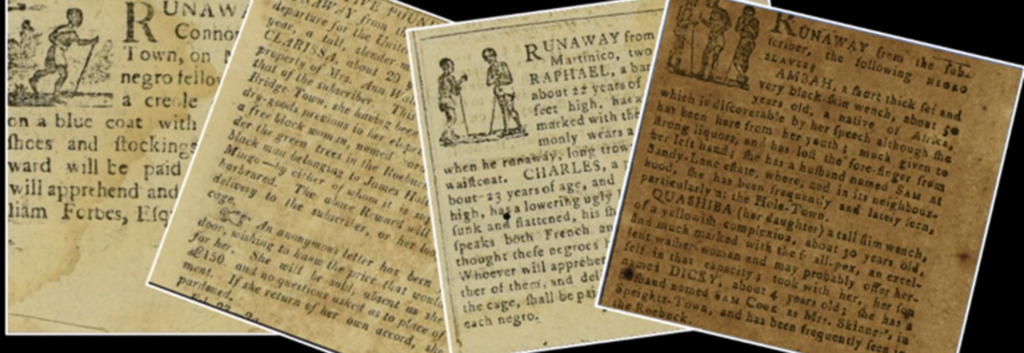
Colonial newspapers in Barbados are replete with advertisements about enslaved people who self-emancipated to escape bondage. The aim of these advertisements was to dehumanize people and aid in their capture. Despite their violent character, however, these ads preserve the memory of resistance and agency, contain vivid portraits of individuals, and reveal kinship information.
During this event, four scholars and practitioners will discuss ethical issues of using these ads as sources of information and will present different ways that they have used to engage with these ads.
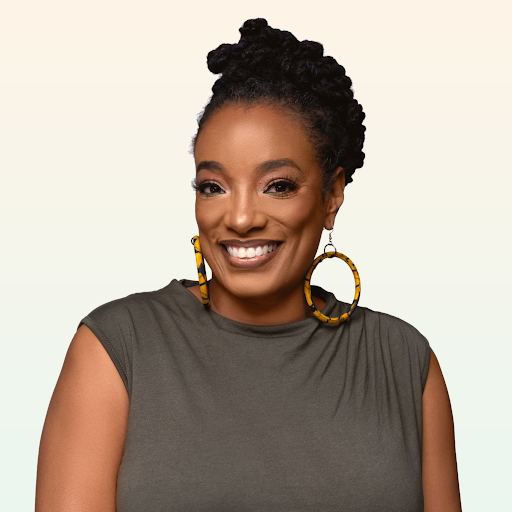
Michelle Hinkson-Cox
Playwright; applied theatre specialist & artistic director; PhD Candidate (University of Glasgow); Theatre Arts Associate Degree Coordinator (Barbados Community College)
Excavating the Silences: “Runaway” advertisements as source material for theatrical performances
Michelle Hinkson-Cox is a theatre artist, scholar and wellness professional whose work brings together heritage, leadership, education, and care.
In theatre, Michelle is a playwright, poet, director, producer, educator, and published researcher. She served as Artistic Director for CARIFESTA XV in Barbados, highlighting both her creative vision and her commitment to Caribbean arts and culture. Her professional journey began in 1999 after completing an Associate Degree in Performing Arts at the Barbados Community College, where she is now Coordinator of the Associate Degree in Theatre Arts.
Michelle holds a BA in Theatre Arts from The University of the West Indies, St Augustine, where she began her career as a tertiary educator at the Centre for Creative and Festival Arts. She then completed her Masters in Applied Drama at the University of London, focusing her research on heritage and community theatre. She is currently pursuing a PhD at the University of Glasgow, with a full scholarship from the Scottish Graduate School for the Arts and Humanities, using playwriting to explore difficult and often silenced histories.
Beyond the stage, Michelle served as Cultural Officer for Theatre Arts at the National Cultural Foundation of Barbados, founded Rhema Artistic Consultants & Theatre Services, and is the Manager – Client Relations and Administration for Driven Visual Media. Alongside her arts practice, she is a certified personal trainer, corrective exercise specialist, sports massage therapist, and Human Resources Consultant at Apollo Fitness Barbados, with a strong interest in women’s health, rehabilitation, and elder care.
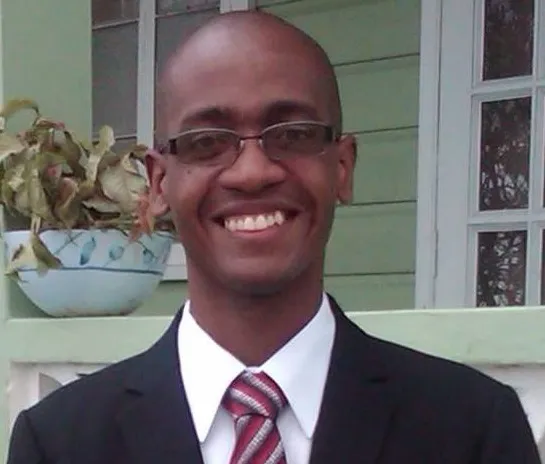
Nicholas Mayers
Genealogist; Clerical Officer – Library and Information Services Unit – Central Bank of Barbados
Runaway Slave Ads as Genealogical Sources: Reconstructing Enslaved Lives
Nicholas Mayers is a Barbadian genealogist and family historian with a deep passion for preserving and sharing the history of Barbados. His work is dedicated to educating both local communities and members of the Barbadian diaspora about their heritage, with a focus on making historical and genealogical research accessible and meaningful.
With over fifteen years of experience in genealogical research, Mr. Mayers began his journey in 2007 at the Barbados Department of Archives, where he initially traced his own family lineage. His research successfully extended back to the period of enslavement, providing a foundation for his broader work in uncovering the histories of individuals and communities often underrepresented in traditional records.
Building on this foundation, he expanded his research to include the descendants of former residents of Bibby’s Lane, St. Michael, as well as the history of land ownership in the district dating back to the 1830s. His detailed and methodical approach to research led to the development of three dedicated websites: one documenting the lives of past residents of Bibby’s Lane, another presenting historical nonfiction short stories centered on Africans enslaved in Barbados, and a third exploring the events surrounding the 1937 riots in Barbados. In addition, he produces short educational videos that highlight key aspects of Barbadian history.
Mr. Mayers holds a Bachelor of Science in Political Science and History with Upper Second Class Honours from the University of the West Indies Cave Hill Campus, as well as an Associate Degree in Arts in Information Technology and History from the Barbados Community College. His academic background supports his interdisciplinary approach, combining historical analysis with modern research tools and digital platforms.
He currently serves as Information Officer for the Barbados Genealogy Group, a subcommittee of the Barbados Museum and Historical Society. In this role, he is responsible for producing the group’s newsletter, Connections, and facilitating workshops that train participants in genealogical research methods, including the effective use of online databases and archival resources.
Between 2019 and 2020, Mr. Mayers played a key role as a workshop facilitator in the Runaway Slave Advertisements Project, an initiative focused on the extraction and transcription of advertisements from digitized editions of the Barbados Mercury and Bridgetown Gazette (1783–1848). This work contributed to making valuable historical data more accessible for research into enslaved populations and their descendants.
Through his ongoing research, public engagement, and educational initiatives, Nicholas Mayers continues to contribute to the preservation and interpretation of Barbadian history, helping individuals connect with their ancestry and better understand the historical forces that have shaped their identities.
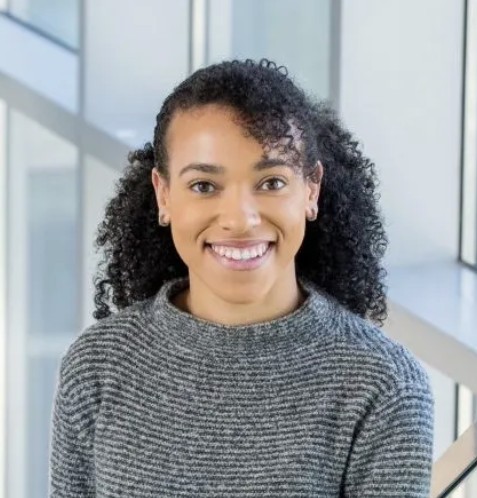
Andreana S. Cunningham
Anthropologist; Assistant Professor of Anthropology, Archaeology, and African American and Black Diaspora studies, Boston University
Using fugitive slave advertisements in the study of the biosocial effects of enslavement
Andreana (Andree) Cunningham is an Assistant Professor of Anthropology, Archaeology, and African American & Black Diaspora Studies at Boston University, and a bioarchaeologist of Jamaican descent. Her research integrates archaeological and archival evidence to examine the diverse ways enslaved people were shaped biologically and socially by the enslavement contexts they were immersed in. Her research also examines the ways that sites of enslavement can be used to reimagine theory and practice around heritage preservation and community engagement. Lastly, her work grapples with ethical standards of research, teaching, and curation of human remains identified recovered from historical contexts. As an extension of her research praxis, she serves on the Community Partnerships Committee for the American Association of Biological Anthropologists and the Coalition for Caribbean Archaeological Heritage.
Andree’s fieldwork and consultation has included non-invasive skeletal studies, archival analyses, and community-based efforts in the US, Caribbean, St. Helena, and South Africa. And in Barbados in particular, she has worked at Newton Plantation alongside the “runaway” archives. At BU, Andree develops and teaches courses related to slave trade history, African diaspora archaeology, and human skeletal biology. Her recent scholarship includes theoretical explorations of how the remains and burials of historic Black persons are perceived, ethics in island archaeology, and patterns of diversity in enslavement era St. Helena. Her most recent project is a collaborative facial approximation project with St Helenian artists to artistically interpret three people buried at the ‘Liberated African’ burial ground in Rupert’s Valley, St Helena. The portraits from the project have since been curated in a special exhibit at the St. Helena Museum in August of last year.
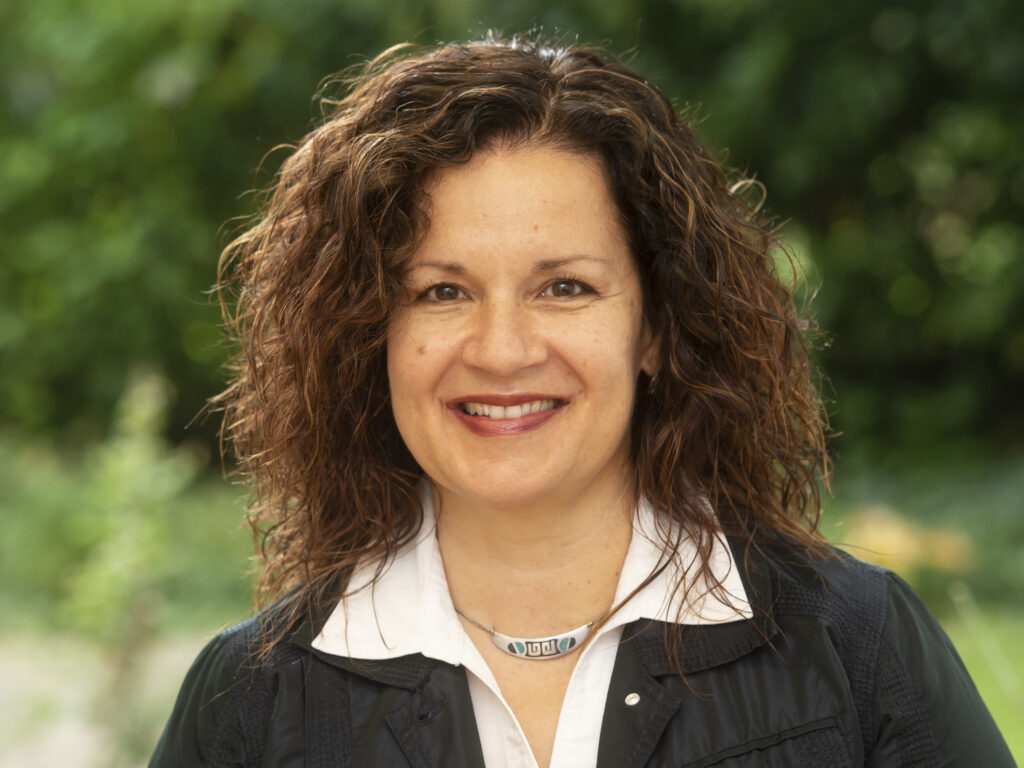
Amalia S. Levi
Archivist; historian; Director of Programs, HeritEdge
From records of persecution to records for life writing: “Runaway” advertisements as archival records
Amalia S. Levi, an archivist and cultural heritage professional, is Executive Director responsible for Programs, and the founder of HeritEdge. Amalia’s PhD is from the Bonn Center for Slavery and Dependency Studies at the University of Bonn; a dual Master’s degree in Library Sciences (MLS), concentration in archives and an M.A. in History, with a focus on Jewish Studies, both from the University of Maryland; an M.A. in Museum Studies is from Yildiz University in Istanbul, Turkey; and a B.A. in Archaeology and History of Art from the University of Athens, Greece.
As a practicing archivist, she has completed archival processing and digitization projects in the Caribbean with a special focus on colonial archives and Jewish collections. Through grants from the British Library’s Endangered Archives Programme and UCLA’s Modern Endangered Archives Program, she has led digitization projects with archival collections in partnership with the Barbados Archives.
Amalia has published two life stories based on “runaway” slave ads, one for Ariadne and one for an unnamed boy. One more, for Caesar, is under publication. She has also organized and co-led public workshops around the ads. In her research, Amalia is interested in augmenting historical scholarship on diasporas and underrepresented populations through linking and enriching dispersed collections. She has published extensively on issues of colonial archives, ‘archival silences’, and knowledge construction.