
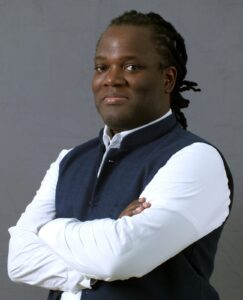
 Dr. Stanley H. Griffin is Head of Department and Senior Lecturer in Archival and Information Studies in the Department of Library and Information Studies at The University of the West Indies, Mona Campus, Jamaica. He holds a BA (Hons.) in History and a PhD in Cultural Studies (with High Commendation) from The University of the West Indies, Cave Hill Campus, and an MSc in Archives and Records Management (International) from the University of Dundee, Scotland.
Dr. Griffin began his archival career at UWI Cave Hill, serving in the University Archives and Records Management Programme. In 2018, he became lecturer in archives and records management, taking on several leadership roles within the Department of Library and Information Studies and the Faculty of Humanities and Education (as Deputy Dean for Undergraduate Matters). Since becoming Head of Department in 2024, he has led a major transformation of the department through the “Review, Renew, Revitalize” strategy, introducing new academic programmes and the DLIS Information Institute (our new micro-credential learning arm).
A prolific scholar, he has produced numerous publications, technical reports, and presented keynote lectures regionally and internationally. His research focuses on Caribbean archives, cultural memory, migration, and community archives, and he has supervised more than 45 graduate research projects in areas of History and Caribbean Heritage, Archival Studies, Cultural Studies, Library Studies and Theology.
 Dr. Alex Gil is Senior Lecturer II and Associate Research Faculty of Digital Humanities in the Department of Spanish and Portuguese at Yale University, where he teaches introductory and advanced courses in digital humanities, and runs project-based learning and collective research initiatives. Before joining Yale, Alex served for ten years as Digital Scholarship Librarian at Columbia University. His research interests include Caribbean culture and history, digital humanities and technology design for different infrastructural and socio-economic environments, and the ownership and material extent of the cultural and scholarly record.
Over the past decade, he has been a prolific producer and contributing team member of many recognized digital humanities projects and scholarly software, including Torn Apart/Separados, In The Same Boats and Wax. His scholarly articles have appeared in several essay collections and refereed journals around the world, including Genesis (France), the Canadian Review of Comparative Literature, and Revista de Investigaciones Literarias y Culturales (Venezuela). His forthcoming edition and translation of the lost, original version of Aimé Césaire’s “…..Et les chiens se taisaient” is forthcoming from Duke Press.
He is currently senior editor of archipelagos journal, editor of internationalization of Digital Humanities Quarterly, co-organizer of The Caribbean Digital annual conference, and co-principal investigator of the Caribbean Digital Scholarship Collective.
 Eira Tansey is an archivist, researcher, and consultant, who specializes in the impacts of climate change on archives and cultural heritage. Eira’s research on archives and climate change has been profiled by Yale Climate Connections, VICE, and Pacific Standard, and has been honored by the Society of American Archivists. Her most recent publication is A Green New Deal for Archives, which received the 2024 Waldo Gifford Leland Award for writing of superior excellence and usefulness in the fields of archival history, theory, and practice. She is an elected Council member of the Society of American Archivists, the governing body for North America’s largest professional association of archivists.
Eira is the founder and manager of Memory Rising, which provides research, consulting, and archival services with expertise in climate change, environmental and labor movements. Prior to starting Memory Rising, she worked in academic libraries for 15 years, at the University of Cincinnati’s Archives and Rare Books Library (2013-2023) and at Tulane University Library’s Louisiana Research Collection (2008-2013). She received her MLIS from San José State University’s School of Library and Information Science.
Together with colleagues, Eira has created a comprehensive data set of US archives known as RepoData. The project maps archives over the map and shows how they will be impacted by environmental disasters and climate chage. Eira has published extensively on archives, climate change, and environmental recordkeeping issues that are compounded by a destabilized workforce. She advocates for a public policy for archives to ensure their future viability and relevance in our uncertain future.

Dr. Amalia S. Levi is an archivist and cultural heritage professional, and the Ex. Director for Programs at HeritEdge. She holds a PhD from the Bonn Center for Slavery and Dependency Studies at the University of Bonn; her Master’s degree in Library Sciences (MLS) with a concentration in archives and an M.A. in History, with a focus on Jewish Studies, are both from the University of Maryland; her M.A. in Museum Studies is from Yildiz University in Istanbul, Turkey; and her B.A. in Archaeology and History of Art is from the University of Athens, Greece. She has worked in Turkey, the US, and Barbados. Her work centers on the alignment of people, programs, and resources to maximize engagement with cultural heritage collections and make the past accessible, exciting, and relevant to diverse audiences.
As a practicing archivist, she has completed archival processing and digitization projects in the Caribbean with a special focus on colonial archives. Through grants from the British Library’s Endangered Archives Programme and UCLA’s Modern Endangered Archives Program, she has led digitization projects with archival collections in partnership with the Barbados Archives. Before that she completed the archival processing and digitization of the records of the Synagogue Restoration Project in Bridgetown, Barbados.
In her research, Amalia is interested in augmenting historical scholarship on diasporas and underrepresented populations through linking and enriching dispersed collections. She has published extensively on issues of colonial archives, ‘archival silences’, and knowledge construction.
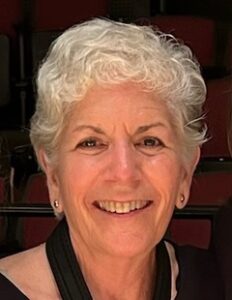 Bess G. de Farber is a grantseeking and collaboration development consultant with ASK Associates, Inc. Her career spans four areas: musician and arts administrator; program officer managing grant awards in arts and culture, social services, and human and race relations; nonprofit management consultant; and academic research development professional. Over the past 40 years, she has provided collaborative grantseeking training to thousands of professionals across libraries, nonprofits, academia, and the arts, and has led efforts securing millions of dollars in funding for nonprofit, cultural, and educational organizations.
Her CoLAB Workshops have engaged nearly 4,000 participants through more than 80 sessions held in libraries, classrooms, conferences, and nonprofit settings. The workshops are recognized as practical, transformative tools for advancing collaboration. Bess’ workshops, along with her book Collaborating With Strangers: Facilitating Workshops in Libraries, Classes, and Nonprofits (co-authored with April Hines and Barbara J. Hood), introduce an asset-based approach to community development. She is also the author of Creating Fundable Grant Proposals: Profiles of Innovative Partnerships. She holds a Bachelor of Music from the University of Southern California and a Master of Nonprofit Management from Florida Atlantic University.
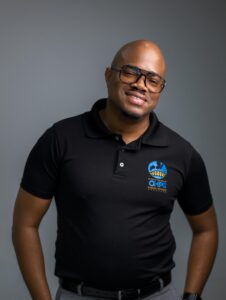
Zimronn Andrews is a Senior Transformation and Modernisation Specialist and policy strategist in the Office of the Head of the Public Service of Barbados, where he supports the delivery of the country’s mission-oriented transformation agenda under the leadership of Mrs. Donna Cadogan, Head of the Public Service.
He plays a central role in implementing Mission Barbados, aligning national policy with long-term outcomes through whole-of-government and whole-of-society collaboration across six priority areas: sustainable development; social cohesion and national identity; food and water security; public health and public safety; worker empowerment and enfranchisement; and digital transformation.
Zimronn is instrumental in designing and operationalising the systems and processes that drive delivery across the six national missions. He works closely with Senior Ministers, Permanent Secretaries, and cross-sector partners to translate strategy into delivery, with a strong focus on innovation, accountability, and measurable results.